
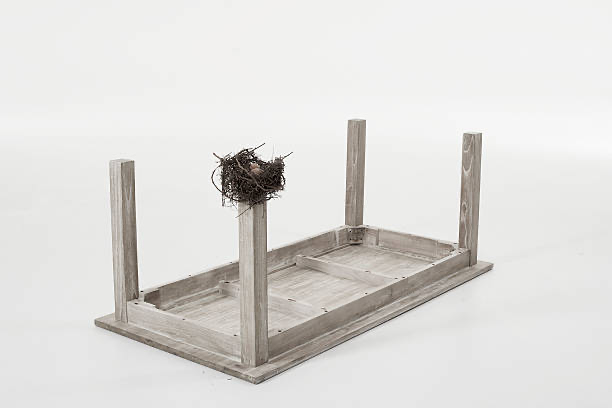
Turning the tables upside down
Betty Stroud
Year C 2025 Pentecost 12
Luke 14:1, 7-14 and Hebrews 13:1-8, 15-16.
The reading we heard is, potentially, a very dangerous text. Both for the time it was written and for us today.
Why? we might ask ourselves
Basically, I think, because it deals with cultural laws – or cultural norms.
In some ways, cultural laws often place stronger demands on us than laws of enforcement.
If we are seen to be going against what society expects of us, then we place ourselves in positions of ridicule. If we buck what is the norm, then we will probably find ourselves landing in all sorts of trouble.
In this morning’s reading we have a story of Jesus going against what society expected. Let’s listen to the account through the eyes of the man – a Pharisee, who invited Jesus to his house.
How dare he! How dare he!
I invited him into my home in good faith. Well ….. almost. I did want to see how he behaved – especially as it was the Sabbath and we’d had some problems with him before over what he did on the Sabbath
He behaved alright!
He had the hide to tell a story about seating arrangements!
He’s a Jew. He’s supposed to be a teacher of the law, he should know there’s a protocol that has to be observed
He’s lived long enough to know that the host arranges the seating how he wants. And it is customary to put those who are more important closer to the head of the table.
This nonsense about sitting in a place lower down the table so that the host can invite you to take a higher place. Well, it’s just not on.
And what about his comments that the first shall be humbled and the last exalted! What on earth is that supposed to mean!
Anyway, I feel quite insulted that a guest whom I invited into my house to share a meal with me and some of my friends should carry on in this way. This man should know how to observe the proprieties.
Then he started telling me whom I should invite to my meals.
Doesn’t he know I invite the people I want to invite!
It’s alright for him. I’ve heard he eats regularly with sinners….. and with the outcasts! I mean, what about that woman whom he hob knobs with – the one who poured perfume all over his feet.
Really!
I’m sorry I invited him.
How dare he abuse me in this way!
But do you know what really got to me?
He started talking about the poor, the crippled, the lame, and the blind and how I should invite these people instead of my friends.
Well …… I don’t know any of these people. How can I invite them to my place – even if I wanted to.
At times I’ve seen some of the crippled. They gather down by the pool of Siloam hoping to be cured. They’re a sight for sore eyes really. They fill me with repulsion. Their limbs are deformed – and some of them haven’t even got limbs.
Imagine inviting them to my house. I’m a respectable person. I have a position to maintain. I can’t be seen to be eating with people like this. Even if I knew any of them …. which I don’t.
Then there’re the poor. I don’t know any poor! The poor aren’t amongst my circle of friends. How can I invite them if I don’t know them. It would take me some effort to find out who the poor are. And even if I do find out who they are … I mean …. they’re in a different league to me.
Besides, I wouldn’t know what to say to them. I don’t know anything about the way they live, and to tell you the truth, I don’t really want to know.
Then he mentioned the blind. Again, I don’t know any blind people. Except of course, the ones I pass in the street every day. There they sit, day after day, holding out their hands for money or food or whatever. I keep a good distance away from them. Just to see those sightless eyes staring at me makes me feel uncomfortable. Imagine what it would be like if I had them staring at me across my own dinner table! No …. I couldn’t invite them to dine with me.
He …. that is, Jesus, is mad to even suggest it. I’m quite happy doing things the way I’ve always done them. I’m quite happy with the friends I’ve got thank you very much. We get on well together and the conversation is always good. It flows well because we’re all very much alike.
Anyway, as I said right back at the beginning.
How dare this man Jesus abuse my hospitality in this way!
———–
Do you and I have guests that disturb us. Do we have guests, like Jesus, who force us to think about why we do certain things and whether we could do things in a different way?
I don’t know about you, but I’ve had a few guests in my time who have challenged me to think a bit differently.
But let’s imagine that Jesus is here – speaking to us this morning. Challenging us about how we do things. Asking us to turn our practices upside down.
Would we be disturbed by his presence? Would we, like the Pharisee, feel affronted by his words to us.
I have a funny feeling that we might find Jesus a very disturbing, and perhaps even alienating guest.
For what Jesus is suggesting in this passage when he talks about the humble being exalted and those who exalt themselves being humbled, is what has been called a polar reversal. It’s a complete reversal. Like what would happen if the north pole became the south pole and the south pole becomes the north pole. If this happened, the world as we know it would be overturned
Amazingly, this is what Jesus is suggesting should happen.
The last section of our passage spells out one of the revolutionary features of God’s polar reversal.
A guest list is usually composed of those closest to the host or hostess: relatives, friends, neighbours – and it tends to foster a cycle of reciprocity.
But in our story Jesus went against what was the current way of thinking and proposed inviting a different group to the next lunch we are having – the poor, the crippled, the lame and the blind. These people were not only beyond the usual categories of family, friends, and rich neighbours, they were, by Jewish, law unclean.
The host was being urged to cross a big boundary and offer hospitality that couldn’t be repaid and which was radically different to the norm.
Here, Jesus was urging a social system without reciprocity and one that was counter to everything society expected.
It’s not easy moving outside the circles in which we are comfortable.
It requires effort to get to know people who are different to us.
It’s hard.
We might ask ourselves, “Who are the poor, the crippled and the blind of our day?’
The problems that confront them are problems that we, in most instances, have no idea about. We can guess, but unless we actually get to know the homeless, the financially stretched, the outsiders, those who are ‘different’, we can’t even begin to imagine what it would be like.
Yesterday, as I read an article about the Marches for the Australia which are taking place across the country today, I couldn’t help thinking that there will be people who want to limit those to whom we offer hospitality. It seems to me that the marchers are saying ‘only a certain kind of person is good enough to be part of our country. We want to limit the intake of those seeking to come here, and place restrictions on the sort of people who come’.
I would hazard a guess that if Jesus was here amongst us this morning he would be asking us uncomfortable questions. Questions that we might see as threatening.
Questions about who we include and who we don’t include.
And I think that as Jesus’ disciples, we have to think very seriously about our answers to the questions he would put to us.
For Jesus came to turn the world upside down. To extend us beyond our comfort zones. It’s not easy moving outside our circles of comfort and security. But I believe this is where we are called to move. As I’ve ministered here over the past five months, I have, at times, been taken outside my comfort zone as I’ve encountered people whom I wouldn’t normally encounter on a day to day basis. It’s one of the reasons I came here to minister – to get to know people who come from different backgrounds than mine and yet, who are the same as me: a unique child of God.
Take a moment to look at the picture – see what’s sitting on one of the table legs: a bird’s nest with a small nestling.
I chose it because it says to me that when the norm is turned upside down – moments of grace happen. It brings to mind the verse from our Hebrew’s reading:
‘Do not neglect to show hospitality to strangers, for by doing that, some have entertained angels without knowing it.’
When we invite so called strangers into our lives, we can so often be blessed with the riches and understanding they offer us.
May you – members of this congregation, be blessed as you continue to offer hospitality, love and generosity to those who come amongst you and those whom you invite into your lives.

