
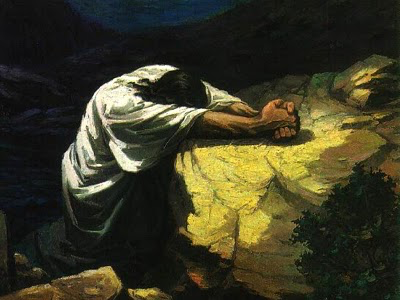
Lord, teach us to pray
Betty Stroud
Year C 2025 Pentecost 8
A new minister arrived in the congregation. After her first service, all the members who had been there were really impressed with the liturgy and, especially, the sermon.
The following week, the minister repeats the same sermon – pretty well word for word. People in the congregation look around at one another, as if to say ‘What’s going on?’
The next week it’s the same sermon again! And some people are getting a bit fed up. A couple of them seek out the Church Council chairperson to complain. He says, ‘Let’s wait and see.’
But the next week it’s the same sermon again and so the chairperson decides to talk with the minister. He’s encouraging about her obvious gift for preaching, but suggests she might try something different.
The next Sunday, the minister acknowledges that she understands people’s concerns about her repetition but says, ‘When we start doing/living out the gospel that I preached about, I’ll move on to something new.’
The Lord’s Prayer is something that is repeated week after week – handed down to us through the centuries since Jesus first offered it to his disciples. Is it something we just repeat – with little thought for the words, and like the congregation with a new minister, don’t really live it out?
The prayer is one of two versions in the gospels – the other being in Matthew. They are slightly different, but both writers would have received this prayer from the same source and then adapted it to suit the needs of the people for whom they were writing.
Luke has taken the prayer to show his community what their prayer life needed. His community may well have been struggling with differences of opinion, or with what needed to take priority in their life; or how to deal with relationships within their community. Not much different in fact, to what any community of faith struggles with from time to time.
This prayer is a prayer that helps people deal with what is going on in their lives and the situations they find themselves as a community of Jesus’ followers. As such, it is as important for us today as it was for Luke’s community.
So I want us to take a closer look at it.
Overall, I think it has, at its heart, a re-imagining of relationships, a re-imagining of possibilities, for each line has implications of God’s intention for creation.
Firstly, we might ask ourselves, ‘What does it mean to name God with the intimacy of a child to a parent, and to honour that same God with our next breath – declaring God as holy?
You know, intimacy can sometimes be dangerous- when places which should be safe, are not. Honouring our parents, our elders, our carers can often appear to be an irrelevancy – or, when we’ve been abused, a no go.
Naming God as parent can be risky, for offering ourselves in relationship – any relationship, can be costly. We don’t always know where it’s going to lead us. Deepening our relationship with God can be risky. Who knows where God’s Spirit will blow us? Who knows what we might find out about ourselves and others as we find out more about God?
God, when offering Jesus to our world took a huge risk. Whilst on the one hand, it meant that lives were changed, on the other it resulted in Jesus’ death on a cross.
When we name God as ‘Abba’ – the intimate term for God as parent. When we name God as holy, we recognise God as a God of relationship. A God who is concerned about us. A God whom we can never know fully, but who wants to draw us closer into a relationship with God – who is the source of our very being.
In the next part of the prayer we ask for God’s reign to be realised: What does that look, and sound, and feel like, in our world?
That’s a question for you to think about and respond to: When we ask for God’s reign to be realised, what does that look, sound and feel like in our world?
Take a moment to think about the question and your answers.
When Jesus talked about the reign of God, he talked about it in terms of everything that we see as normal being turned upside down. Throughout the gospels we hear his words: ‘the last shall be first and the first shall be last’. What he meant was those whom you would expect to gain the top places at God’s banquet will not be there – instead, the poor and the outcast, the disenfranchised and the lowly, will be given the top seats.
When we ask for God’s reign to be realised we are praying for things to change dramatically. We are praying for what we might regard as ‘the norm’ to be turned on its head.
Praying for bread each day sounds simple – especially for those who don’t have to worry about where their next loaf of bread is coming from. But then we remember that people – children each day – are dying of starvation in Gaza, with hundreds of food trucks – queued and immobile, on the other side of the barriers. Others die, waiting for the miserly handouts, when soldiers open fire.
Jesus’ words are carefully articulated.
Is it possible that the reign of God and bread for each day and forgiveness for ourselves and for our neighbours are inextricably linked?
Dr Martin Luther King spoke powerfully when he said, ‘Our lives begin to end, the day we remain silent about things that matter.’
I was reminded of these words when I saw a Facebook post by one of my friends when she said, ‘How can we allow the horrors of Gaza to happen? When will we speak up, instead of burying our heads in our hands and hoping it will all go away? When will we call our government to account for not doing more?
Humanity starts with us: praying for – and doing something about, the bringing in of God’s reign, providing bread for everyone, forgiving ourselves and our neighbours.
Then we come to the ‘time of trial’. Do not bring us to the time of trial we pray.
May I suggest that we are living through a time of trial: this moment, this day, this time.
We are living in a time of trial and uncertainty as far as the climate of our planet is concerned. A time when the horrors of Gaza are brought to our attention on a daily basis. A time when early aboriginal deaths far outstrip early deaths in the rest of Australian society. A time when the ongoing evil of the war in Ukraine seems to have faded into the background. A time when people are struggling to put a rooves over their families’ heads, and a time where the homeless appear to some, as blights on the streets of this city – or worse, are not seen at all.
In this time of trial, how shall we bear witness to Christ?
This prayer – given to his disciples so long ago, is given to us today as well. It calls us to step into it, so that it becomes part of us.
It also calls us to step it out in our lives.
The Danish philosopher Keirgegaard made the following comment, ‘Prayer does not change God, but it changes the person who prays.’ Other people have put it the following way: ‘Prayer doesn’t change things. Prayer changes people and people change things.’
We pray, not to convince God to change God’s mind, but to align ourselves with the intentions and hopes and griefs of God in relation to our world.
We pray, to echo the hope of God for the world, and to be adapted to the cruciform shape of God’s action in the creation.
When we pray we are called – not to recite this prayer on a weekly basis, giving little thought to what it actually means.
When we pray, we are called to open our ears, eyes and hearts.
When we pray, we are called to move our feet and our hands.
The disciples might well have asked, ‘Lord, teach us to live.’
We might think that praying appears to be a less costly request.
It is not.
Abba – father, mother – however we want to address God, hallowed be your name.
Your kingdom come.
(I am indebted to an article by Rev Simon Hansford for giving me kernels of ideas for this message – in particular reminding me of the ‘story’, which I’ve heard many times.)

